Outgrowing Sage 50? Upgrading to Sage 200 just got a whole lot easier with Self Start
If your business is currently running on Sage 50, you’ve probably noticed the signs that you’re outgrowing it. Maybe your system is lagging under...
4 min read
You may be considering a new accounting solution or looking to move from a legacy finance system to something more modern, scalable, and AI-enabled.
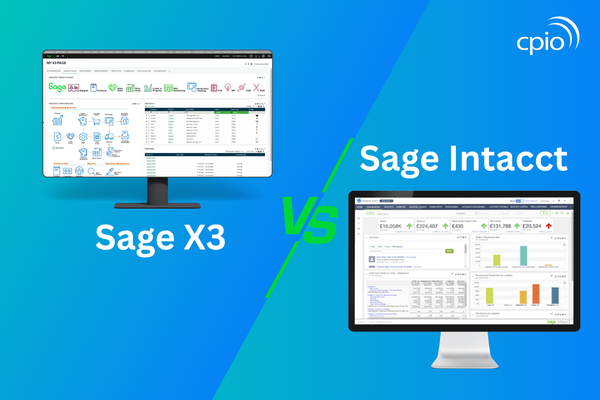
If you’re researching options, chances are you’ve come across Sage Intacct and Sage X3 — two of Sage’s most powerful solutions for growing organisations.
But how do they compare in 2026, especially as businesses increasingly prioritise automation, real-time insights, and AI-driven decision-making? Understanding those differences is key to choosing the right solution for your organisation.
In this guide, we break down the key differences and help you decide which solution is the best fit for your organisation.
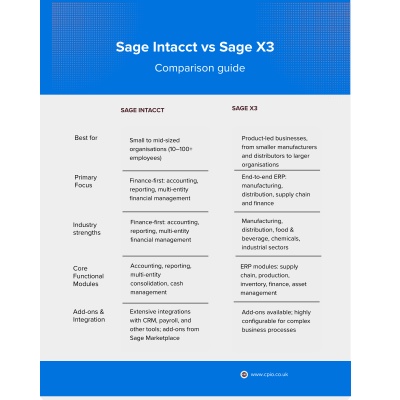
At first glance, comparing Sage Intacct and Sage X3 can feel like comparing two equally capable systems. However, the reality is that they serve different purposes within a business.
Sage X3 is a comprehensive Enterprise Resource Planning (ERP) solution designed to bring finance and operational processes together in one connected system. Particularly suited to product-led businesses, including manufacturers and distributors, it supports key areas such as finance, manufacturing, purchasing, inventory, sales and supply chain management.
In contrast, Sage Intacct takes a finance-first approach. As a cloud-native financial management platform, it focuses on delivering deep accounting functionality, strong reporting capabilities, and seamless integrations with other best-in-class tools.
In simple terms, Sage X3 is about managing finance alongside the wider operations of a product-led business, while Sage Intacct is about transforming how finance operates within the business. The right choice depends on whether you need an integrated ERP to manage your operational processes alongside finance, or a finance-focused solution that connects with the rest of your technology stack.
One of the biggest shifts in recent years has been the rise of AI and automation in business systems. This is where the gap between the two solutions becomes more noticeable.
Sage Intacct has evolved as a modern cloud platform with automation at its core. Finance teams can benefit from faster reporting cycles, improved visibility, and tools that help identify anomalies or trends in real time. In addition, Sage has introduced Sage Ai and Sage Copilot features that bring predictive insights and intelligent workflows into everyday finance processes.
Sage X3 applies automation differently. Its strength lies in streamlining operational processes such as production, inventory, and distribution. While it also supports data-driven decision-making, its focus is on improving efficiency across the wider business rather than concentrating purely on finance.
As a result, the choice often comes down to where you want to apply intelligence: within finance, or across the entire operation.
The right solution depends less on the size of your organisation and more on how your business operates and what you need your software to manage.
Sage Intacct is typically suited to organisations that want to modernise and streamline their finance function with a flexible, cloud-based financial management solution. It provides strong accounting and reporting capabilities and can connect with other business systems through integrations, making it a good fit for businesses that primarily need to transform and improve their financial operations.
Sage X3 is designed for product-led businesses, particularly manufacturers and distributors, that need to manage finance alongside their wider operational processes. It brings together finance, manufacturing, purchasing, sales, inventory and supply chain management in one connected ERP solution. Whether operating domestically or internationally, businesses can use Sage X3 to manage their core processes and support their evolving requirements.
Ultimately, the choice comes down to what you need your system to do: Sage Intacct provides a finance-first approach with the flexibility to connect to other systems, while Sage X3 brings finance and product-led operations together within one ERP solution.
Industry fit and functional depth
Both solutions support a wide range of industries, but they are designed around different business needs.
Sage Intacct is particularly well suited to organisations where financial management and reporting are the primary focus, including SaaS, financial services, not-for-profit and professional services. Its strong accounting, reporting and multi-entity capabilities make it a flexible choice for businesses looking to modernise their finance function.
Sage X3 is particularly suited to product-led businesses, including manufacturing, distribution, food and beverage, chemicals, pharmaceuticals, consumer goods and industrial sectors. It combines finance with the operational processes involved in purchasing, production, inventory, sales and supply chain management, giving businesses a connected view of how their operations perform.
The difference in focus means that functionality such as manufacturing, inventory and supply chain management is built into Sage X3, while Sage Intacct takes a finance-first approach. Intacct can also connect with specialist applications through integrations, giving businesses the flexibility to build a wider technology ecosystem around their finance platform.
Another important consideration is how each system is deployed.
Sage Intacct is a true cloud solution. It is accessed via a browser, updated automatically, and maintained as a single version for all users. This reduces IT overhead and ensures that organisations are always using the latest features without disruption.
Sage X3 offers more flexibility in deployment. It can be hosted in the cloud, on-premise, or in a hybrid environment, depending on the needs of the organisation. This flexibility can be valuable for businesses with specific infrastructure requirements or those undergoing digital transformation at their own pace.
For businesses looking for a single cloud hosting solution that supports Sage Intacct, Sage X3, or Sage 200, our Cloud hosting services provides options that ensure reliable performance, security, and scalability across all platforms.
Both Sage Intacct and Sage X3 now offer AI-driven features, including predictive insights, intelligent workflows, and automation through tools like Sage Ai and Sage Copilot.
The key difference lies in where each solution applies its intelligence:
In 2026, your choice should be guided by the primary focus of your organisation:
Both platforms are AI-enabled, so either choice helps your business become smarter, more efficient, and future-ready.

If your business is currently running on Sage 50, you’ve probably noticed the signs that you’re outgrowing it. Maybe your system is lagging under...

Whilst we are all becoming increasingly aware of cyber threats, cyber criminals are constantly finding new, innovative routes of attack.

If you’re running a business in the UK, you’ve likely experienced the friction between sales and finance. Your sales team lives in Salesforce,...

Compare Sage 200 and Sage X3 across functionality, scalability, manufacturing, reporting, and cost. Discover which Sage ERP solution is the best fit...
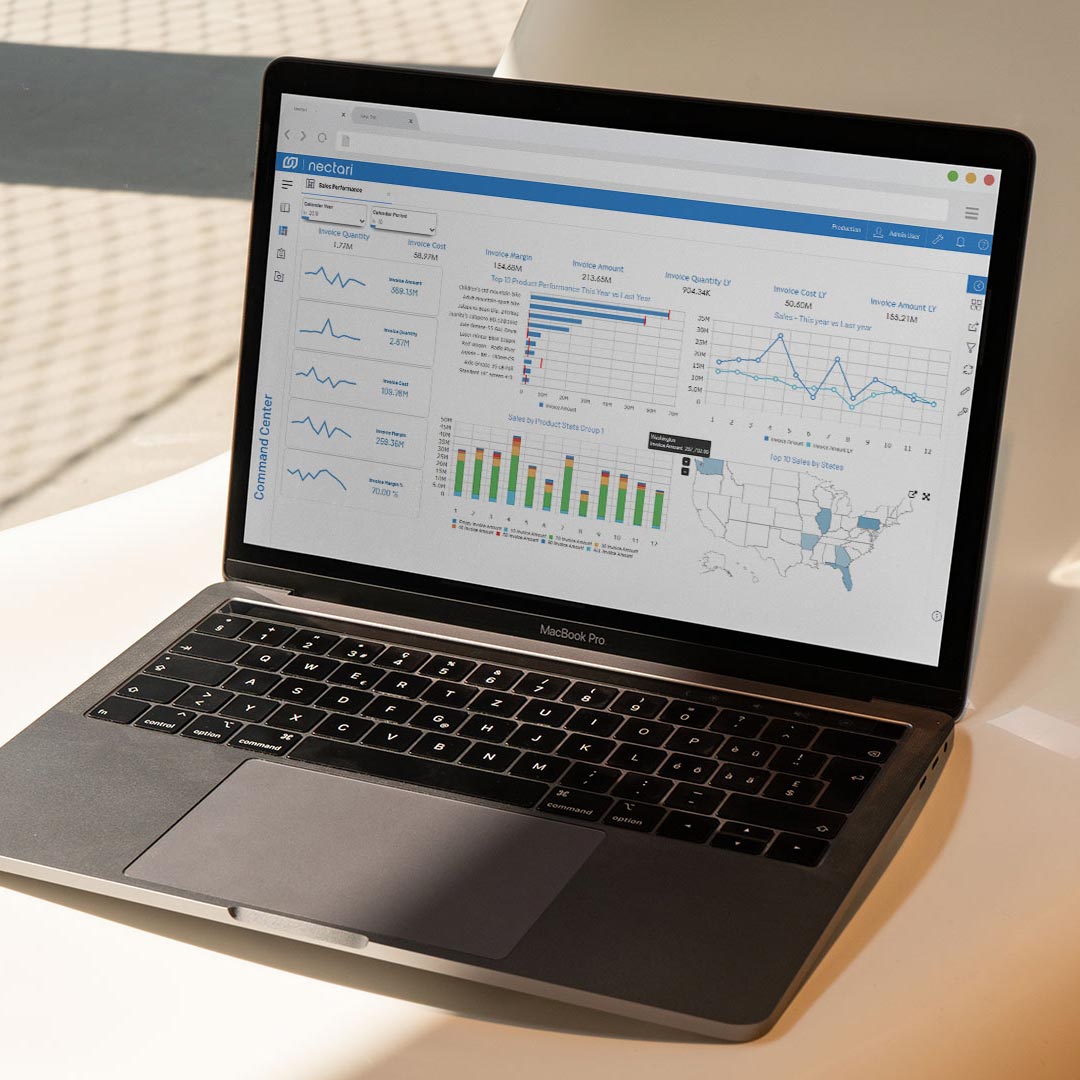
Introducing Sage Enterprise Intelligence for Sage X3, the capabilities, features and benefits and why you should be on the latest version. Find out...

Discover the ten reasons why customers choose Sage for manufacturing ERP solutions, including Sage X3, Sage 200 and Sage Intacct from CPiO.